Imagine a room full of expensive screens, clever people, and enough data to make a careful choice… and then the choice that gets made is so backwards that historians will still be arguing about it in a hundred years.
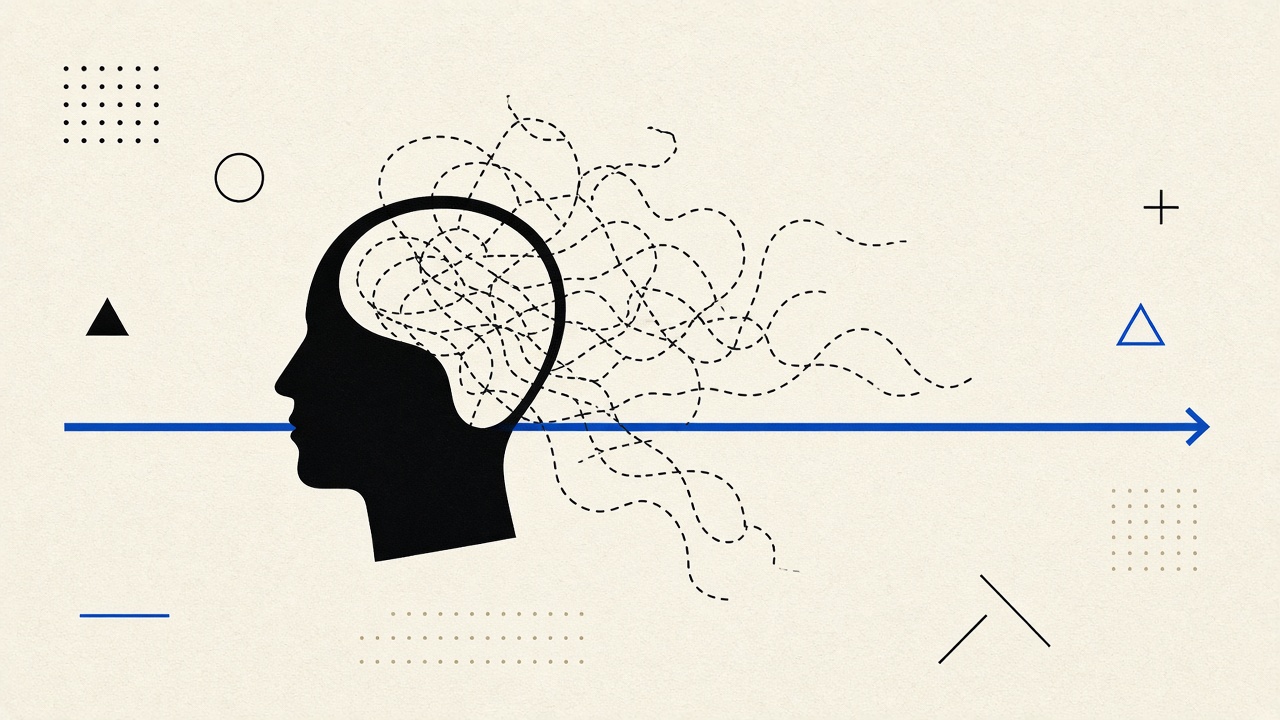
You do not need a war room for this. Your brain does a miniature version every Tuesday. You commit to a story. Then you quietly downgrade anything that disagrees with it.
We love the tidy version of history: humans got smarter, mistakes got rarer, and ancient blunders belong to people who “didn’t know better.” Cognitive science paints a stranger picture. The machinery behind monumental error is not reserved for the careless. It is standard equipment in a healthy mind that is trying to stay fast [1].
The architecture of a blunder
Picture a commander staring at a supply problem that is screaming in plain sight, then ignoring it because the plan already says victory is inevitable. That is not cartoon villainy. Research on confirmation bias and the need for cognitive closure suggests that once the brain commits to a hypothesis, contradictory evidence gets treated as inconvenience rather than information. One useful framing is “cognitive miserliness”: updating a whole worldview is expensive, so the system prefers to keep the current narrative and label anomalies as noise [2].

When cartographers stretch a continent from one bad manuscript, or financial models treat rare disasters as basically impossible, we are not looking at random chaos. We are looking at systematic heuristic failure. Kahneman and Tversky showed decades ago that mental shortcuts are brilliant for surviving fast environments and dangerous when applied to complex, slow, systemic ones [3].
When smart systems fail quietly
Quick thought experiment. You have spent three months building a model at work. Every new data point seems to congratulate your original idea. Then a junior colleague points at one foundational assumption that is upside down.
What happens in the body first? Irritation. A tiny urge to dismiss it. That flicker — scaled up across institutions and centuries — is how pyramids of error get built [4].

We do not only err because we lack reason. Sometimes we err because reason is busy defending the story we already like.
Error-detection research points to brain systems, including the anterior cingulate cortex, that fire when expectation and reality mismatch. But if ego, sunk costs, or social standing are glued to the old narrative, that warning signal can get muffled. We become very efficient at self-deception [5].

- Illusion of control: mistaking a calm stretch of history for a permanent physical law.
- Consensus trap: confusing loud agreement with ground truth.
- Complexity blindspot: assuming an intricate system is safer just because it looks sophisticated.
Back to ordinary life
Why care when you are just trying to survive your inbox? Because recognising the mechanism removes a little arrogance. The next time you catch yourself doubling down on a clearly sinking plan — a petty argument, a broken workflow, a relationship conversation that has become a courtroom — pause.
That may not be dedication. That may be ancient neural machinery protecting an old map while the territory burns.
We are all walking museums of beautiful miscalculations. The useful skill is not becoming flawless. It is learning to laugh a little sooner when the map starts smelling like smoke.