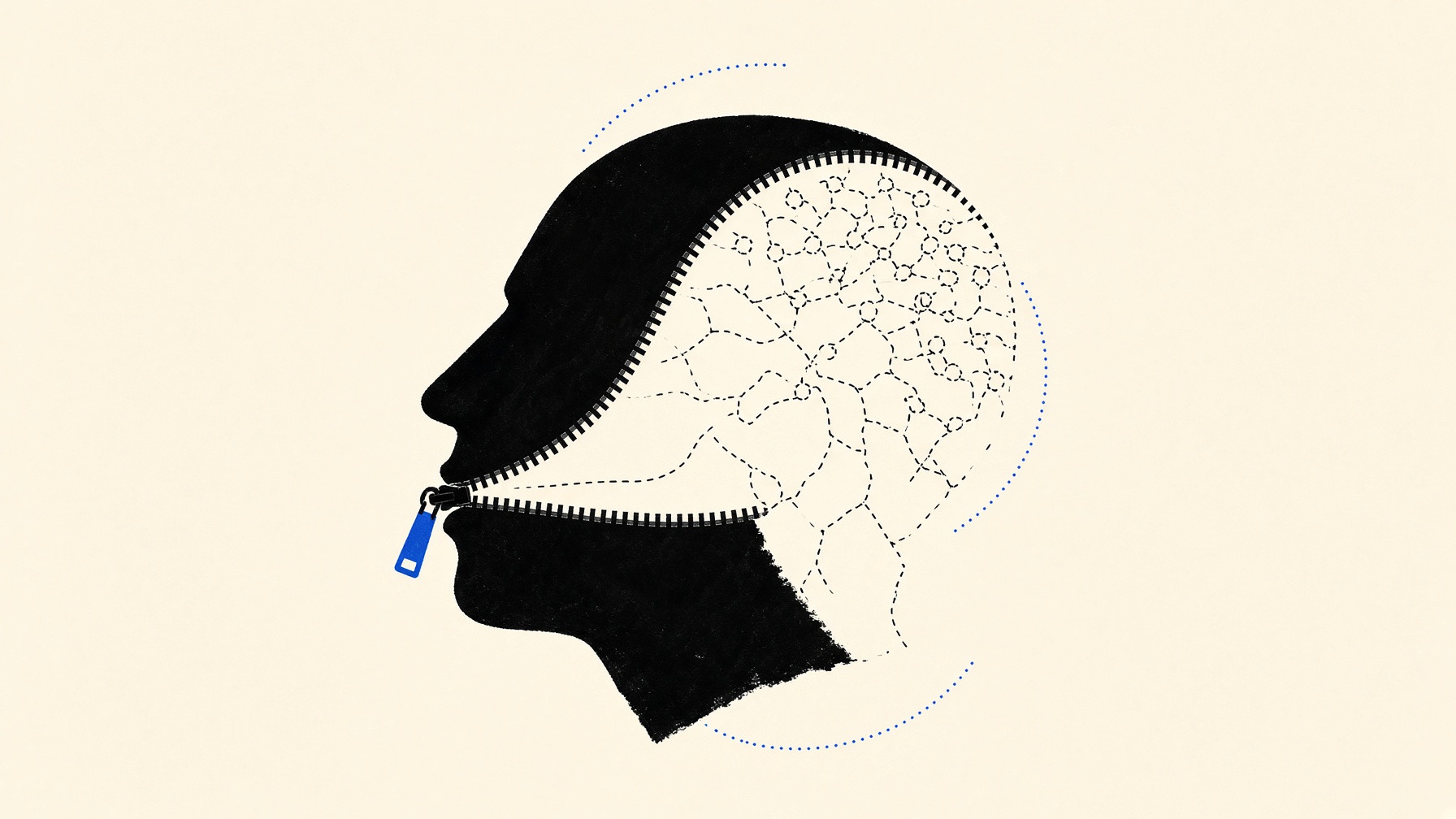
Someone at the table is explaining how a thing works.
A fridge. GST. Why the match was lost. How a zip actually closes. They say it the way people say their own name. No pause. No “I think.” Just the calm of a person who has already arrived.
Then someone, politely or not, asks them to walk through it.
Not the slogan. The mechanism. What pushes what. What happens next. Why it doesn’t fail the other way.
And the sentence that felt like a building turns out to be a doorway with nothing behind it.
This is usually sold as a story about other people. The loud uncle. The confident intern. The person who watched two reels and now has a worldview.
That version is too flattering. It lets you keep the feeling and donate the problem.
The stranger question is this: why does knowing arrive as a sensation long before it arrives as a model — and why are we so slow to notice the gap?
Try the zip
Imagine you have to explain a zipper to someone who has never seen one. No diagrams. No “it just meshes.” Step by step.
The slider pulls. The teeth… do something. There is a wedge, maybe. The two sides are forced together. Or pulled apart. You have used this object since you were a child. You can operate it in the dark.
Now draw the part that actually does the work.
Most people stall around step two. Not because they are foolish. Because the mind stored a label, a gist, and a motor habit — and then issued a feeling that those three things were a working model.
In 2002, Leonid Rozenblit and Frank Keil asked people to rate how well they understood everyday devices: zippers, toilets, speedometers, cylinder locks, helicopters. Then they asked them to write a detailed causal explanation, and to rate themselves again. Understanding scores dropped. The drop was much larger for how things work than for facts, stories, or procedures.[1]
They called it the illusion of explanatory depth.
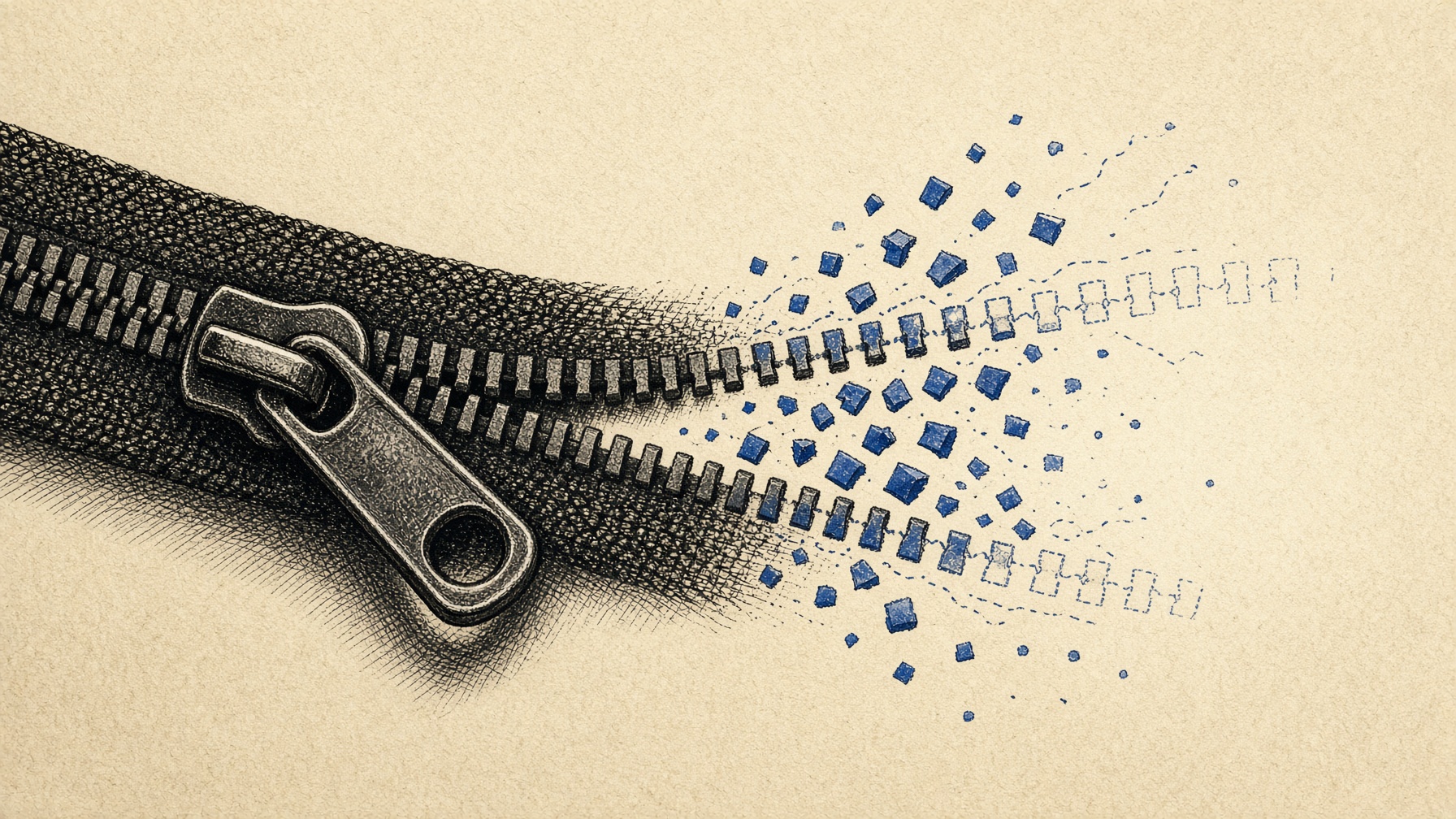
You do not find out you don’t know it by sitting with the feeling. You find out when the feeling is forced to become a sentence.
The feeling is doing a different job
Why would the mind issue a fake receipt?
A plausible reading of the research — marked as interpretation, not a tiny homunculus in your skull — is that everyday life rarely asks for the full model. The zip works. The fridge hums. The policy has a name. Visible parts move in real time, which is exactly when the illusion is strongest.[1]
So the brain files: I have this.
What it actually has is proximity. You have stood near the mechanism. You have heard the vocabulary. You can point at the object. That is not nothing. It is also not the same as being able to reconstruct the causal chain if the object vanished and you had to rebuild it from words.
Eg: you can use WhatsApp encryption as a social fact — “it’s encrypted” — for years. Ask what a key is, who holds it, what end-to-end actually forbids, and watch how quickly “encrypted” becomes interior decoration.
Fluency is not a working model. It is the mind recognising the topic and stamping it paid.
A 2024 set of preregistered studies still found the basic illusion for devices. Feeling powerful made people more generally overconfident, but it barely changed the drop that appears once you have to explain the thing.[8] The glitch is not reserved for the arrogant. It is sitting in the knowledge type.
The feeling usually holds. You either know Delhi is the capital or you don’t.
You can retell the sequence. Gaps show up as “wait, then what?”
You can often perform it even if you cannot lecture it.
This is where the feeling is loudest — and emptiest.
Google will happily sell you the feeling
Then the internet arrived and made the receipt even cheaper.
In nine experiments with more than a thousand people, Matthew Fisher, Mariel Goddu and Frank Keil found that searching online inflated how much knowledge people believed was inside them — including on topics they had not searched. The effect survived even when the search failed to return a real answer. Being in search mode was enough. People conflated access with possession.[4]
That is a slightly rude sentence if you live, as I do, with a rectangle that answers almost anything in 0.4 seconds.
The rectangle is useful. The confusion is the part where the mind files the answer under I knew that instead of I can look that up.
You have watched this happen in a group chat. Someone Googles. Someone summarises. Ten minutes later the summary is being repeated as if it were long-held expertise. No villain required. Just a filing error with good wifi.
Reasons feel like knowledge. Mechanisms do not let you hide.
In 2013, Philip Fernbach and colleagues asked people about complex policies, then either had them generate a mechanistic explanation — how the policy would actually cause its claimed effects — or list reasons for liking or disliking it.
Explaining the mechanism reduced the sense of understanding and pulled extreme positions toward the middle. Listing reasons did not. People who had to explain also became less willing to donate to related advocacy groups.[3]
Read that slowly.
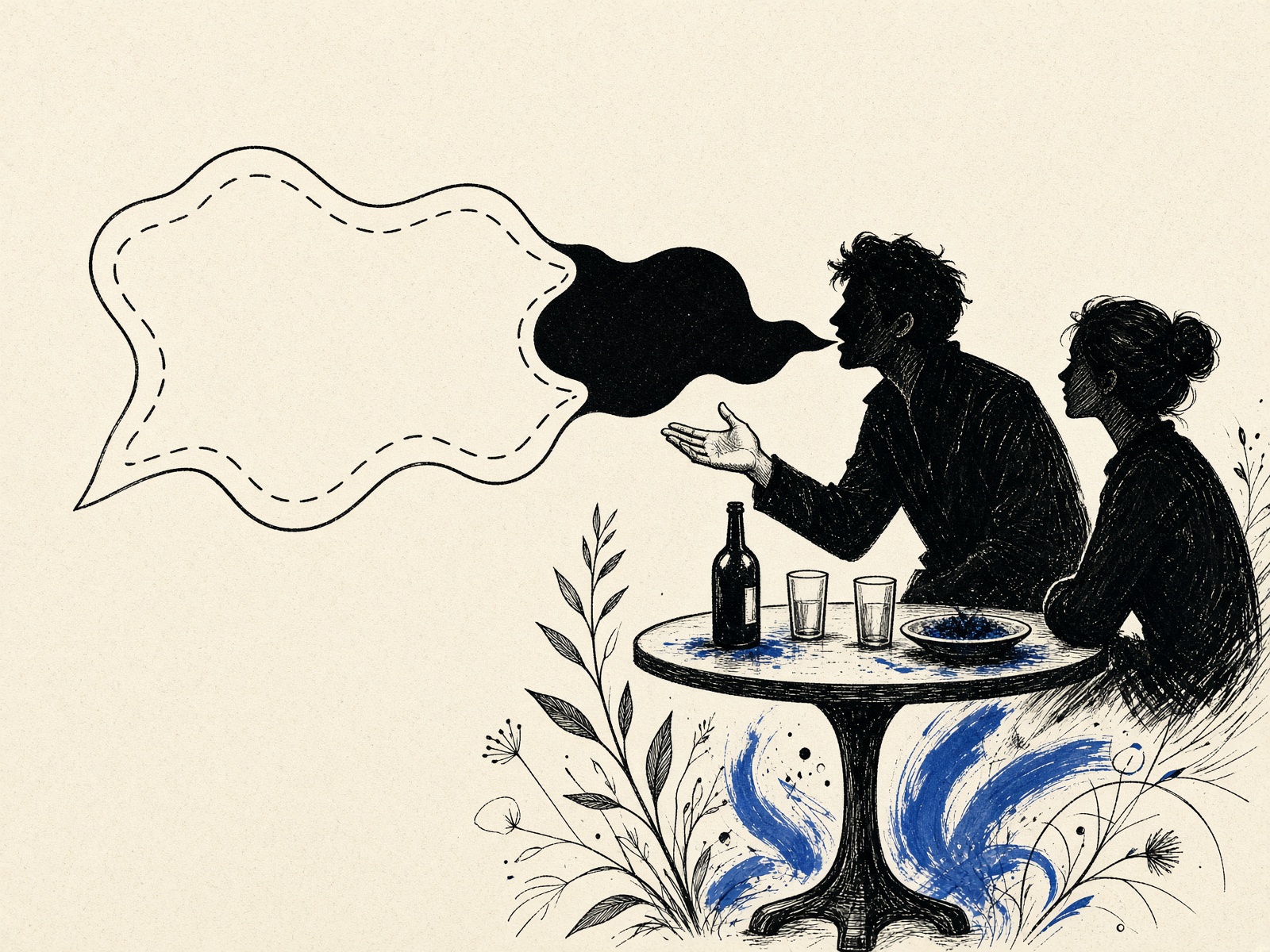
A reason is “because it is unfair” or “because it will help the poor.” A mechanism is “this tax changes this behaviour, which changes this revenue, which reaches this person through this office.” Reasons can be rehearsed. Mechanisms have to survive contact with the next step.
This is not an argument that you should have no politics. It is a narrower, more useful claim: some of what looks like deep conviction is an untested causal cartoon. Asking for the cartoon to become a story with moving parts is often enough to watch the conviction lose a little height.
I have done this to myself. Not as a personality rebrand. As an audit. The moment I have to teach a thing, the feeling that I “basically get it” develops holes I did not budget for.
The internet already named a villain. The science is messier.
If you have been waiting for Dunning–Kruger, here it is — and here is why it should not be the moral of this piece.
In 1999, Justin Kruger and David Dunning reported that people in the bottom quartile on tests of humour, grammar, and logic scored around the 12th percentile and estimated themselves around the 62nd. Their account: the skills needed to perform are also the skills needed to notice you performed badly. A dual burden.[2]
The internet turned that into a personality insult. Stupid people don’t know they’re stupid. It is a satisfying sentence. It is also a great way to stop looking at your own receipts.
Later work has been unkind to the dual-burden story as a special metacognitive disease of the unskilled. Analyses in 2020 argued that the classic graph is largely a statistical artefact of how we plot noisy scores against noisy self-estimates.[5] A 2022 registered report found the famous pattern was driven overwhelmingly by performance scores, not by a unique insight-failure at the bottom.[6]
In 2026, Chris Dawson and David de Meza re-analysed large replication datasets with models that treat both the test and the self-prediction as noisy. Once that is respected, the popular picture does not just shrink. It can reverse: overconfidence shows up more among the more able, not less.[7]
That last result is new, and new results get argued with. Treat it as a competing interpretation, not a replacement slogan.
What survives the argument is less cinematic and more useful.
People misjudge what they know. The feeling of knowing is cheap, especially for mechanisms, especially after a search. The insult version of Dunning–Kruger is a way of pointing at a tribe. The evidence keeps pointing at a glitch in the filing system — including in people who would never put themselves in that tribe.
So what do you do with a feeling that forges receipts?
You do not need a new personality. You need a better test.
The test is not “do I feel sure.” Sure is the default setting of a mind that has seen the object before.
The test is: can I explain the next three causal steps without using basically as a skip button? Can I say what would happen if one part failed? Can I teach it to a slightly annoying friend who is allowed to ask “then what”?
If the answer is no, you do not have a crisis. You have a map with a blank. That is a much kinder discovery than the internet’s favourite hobby, which is diagnosing a whole class of humans as uniquely unaware.
Maybe the people who think they know a lot are not a special species.
Maybe they are us, on a day when nobody asked a follow-up question.
The feeling of knowing is cheap. The explanation is the invoice.